AI strategy ·
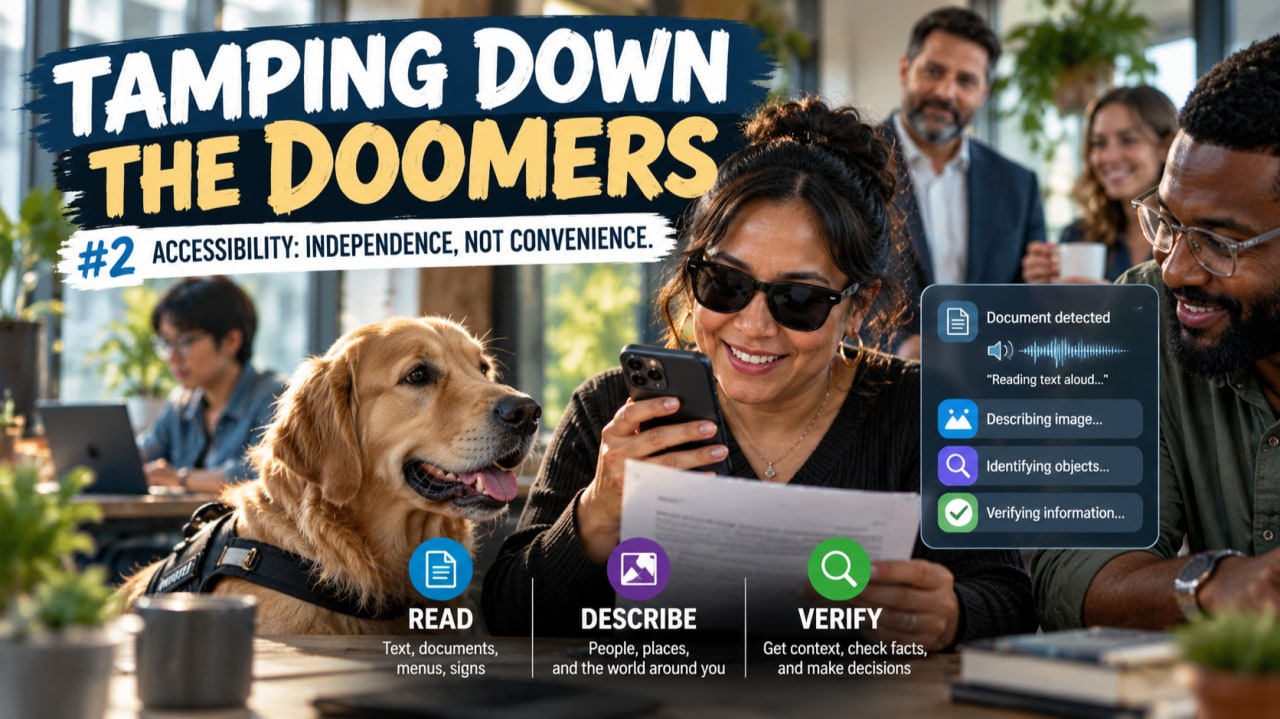
Tamping Down the Doomers #2: AI Accessibility Is About Independence, Not Convenience
How AI-assisted descriptions can expand privacy, confidence, and everyday independence for people with disabilities while still requiring accessible design and protection against harmful errors.
The central idea
AI accessibility is valuable when it gives people more control over ordinary life, but it must complement accessible design, proven assistive tools, and human support rather than replace them.
What leaders should take away
- Design and test AI accessibility tools with disabled people, not merely for them.
- Use stronger verification and human support when an incorrect description could affect medication, traffic, or safety.
- Measure success in independence, privacy, and control instead of treating accessibility as a convenience feature.
Why this matters
AI changes the speed and scale at which organizations can act. That makes operating clarity, trustworthy information, and accountable human judgment more important—not less. The practical goal is to connect new capability to work that matters while making the boundaries visible.
Questions to ask next
- What business outcome are we trying to change?
- Who owns the information, decision, and resulting action?
- What evidence would show that this approach is working?