AI strategy ·
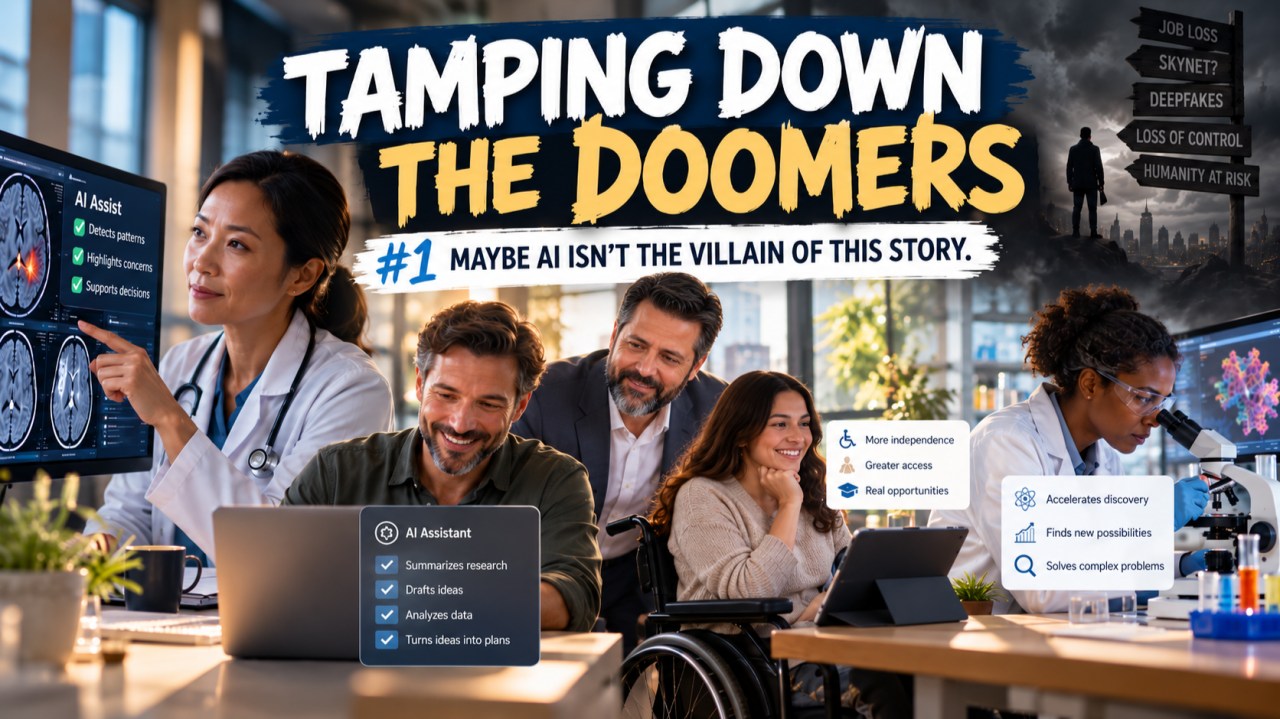
🤖 Maybe AI isn’t the villain 🦹🏻♂️of this story 📖.
A more balanced look at artificial intelligence, grounded in evidence that it can expand access to expertise, improve productivity, and support better health outcomes while still requiring responsible oversight.
The central idea
AI deserves serious safeguards, but fear should not become the entire strategy. Leaders can address real risks while using evidence to identify where AI is already amplifying people and producing measurable benefit.
What leaders should take away
- Evaluate positive and negative AI outcomes with evidence rather than treating either optimism or fear as the default.
- Look for uses that extend expertise and help less-experienced people perform stronger work instead of measuring only labor replacement.
- Pair beneficial applications with human oversight and responsible-AI practices that keep pace with expanding capability.
Why this matters
AI changes the speed and scale at which organizations can act. That makes operating clarity, trustworthy information, and accountable human judgment more important—not less. The practical goal is to connect new capability to work that matters while making the boundaries visible.
Questions to ask next
- What business outcome are we trying to change?
- Who owns the information, decision, and resulting action?
- What evidence would show that this approach is working?